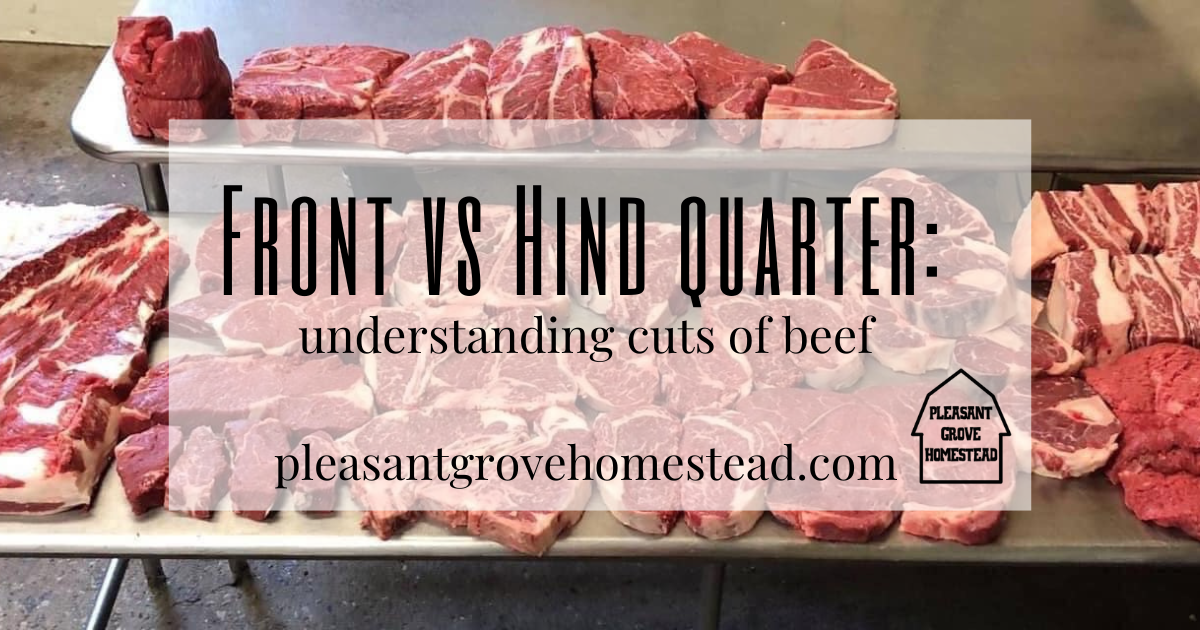
Front Quarter vs Hind Quarter Beef: What’s the Difference & What Do You Get?
This post may contain affiliate links. As an Amazon Associate, we earn from qualifying purchases.
Buying a quarter of beef, half beef, or even a whole beef is one of the best ways to fill your freezer with high quality, locally processed beef. But if you’re new to buying beef in bulk, one of the biggest questions is: What’s the difference between front quarter and hind quarter beef? Does that matter?
And more importantly…
When I order beef from a local locker like (our personal favorite) Wanders Farms in Otley, Iowa — what exactly am I getting?
This guide from Pleasant Grove Homestead explains it all: the primal sections, the various cuts, the role of hanging weight, how much freezer space you’ll need, and why this is the best way to source beef, even if you aren’t a large family!
One thing that’s often asked when people order a half or quarter is, “Am I getting the front or the back?” Actually, when you order bulk beef you are going to receive an equal portion of ALL the cuts of beef. No one gets stuck with all the roasts while another gets all the T-bones. The other benefit is not only do you get the variety of cuts, you will get to choose exactly what you want for your freezer. So let’s break down the differences between the front and the back.
Front Quarter vs Hind Quarter: What’s the Difference?
Beef is typically divided into two main cuts:
- Front Quarter (Forequarter Cuts)
- Hind Quarter (Hindquarter Cuts)
Each provides a different mix of fat content, tenderness, and cooking method. Let’s break it down:
Front Quarter Cuts (Forequarter)
From the front shoulders and ribs:
- Chuck roasts
- Short ribs
- Shoulder blade roasts
- Soup bones
- Short plate
- Prime rib
- Others:
- Ground meat
- Stew meat
- Kabob meat
These forequarter cuts have more connective tissue and fat, which makes them perfect for slow cooking, moist heat, or the slow cooker. These cuts are hearty, flavorful, and often more affordable than hindquarter steaks.
Hind Quarter Cuts (Hindquarter)
From the hind leg, sirloin, and loin:
- Top sirloin
- Sirloin tip steaks
- Filet mignon
- T-bone steak
- New York strip
- Strip steak
- Tenderloin steaks
- Flank steaks
- Skirt steak
- Top round
- Rump roast
These cuts are known for maximum tenderness and are considered the most tender cuts of beef. Many are found in grocery stores and butcher shops as premium cuts of steak.
When You Buy a Quarter Beef — What You’re Really Getting
Many people think a quarter beef means receiving just the front quarter or hind quarter. But that’s not the case when you buy from a local locker! You are
✅ You get a mixed quarter.
That means:
- A fair share of both forequarter cuts and hindquarter cuts
- A combination of steaks, roasts, stew meat, and ground beef
- Specialty items like soup bones, dog bones, and fat for rendering
This ensures each customer gets a balanced portion of the whole beef, rather than one person getting all the steaks and another getting mostly roasts. Better yet, you actually get to choose the best cuts for your family! You can choose to “grind” or make hamburger from cuts you don’t want. If you are not a fan of ribs, just ask for more ground!
How Much Freezer Space Will You Need?
A big consideration when buying a quarter cow is how much room you need to store it.
General rule:
🧊 1 cubic foot of freezer space per 30–35 pounds of meat
So a quarter beef (after trimming) might yield 65–75 pounds of meat — meaning you’ll need around 3–4 cubic feet of freezer space.
Tip: That’s about the interior of a milk crate and a half — enough room to hold all your individual steaks, roasts, and ground beef.
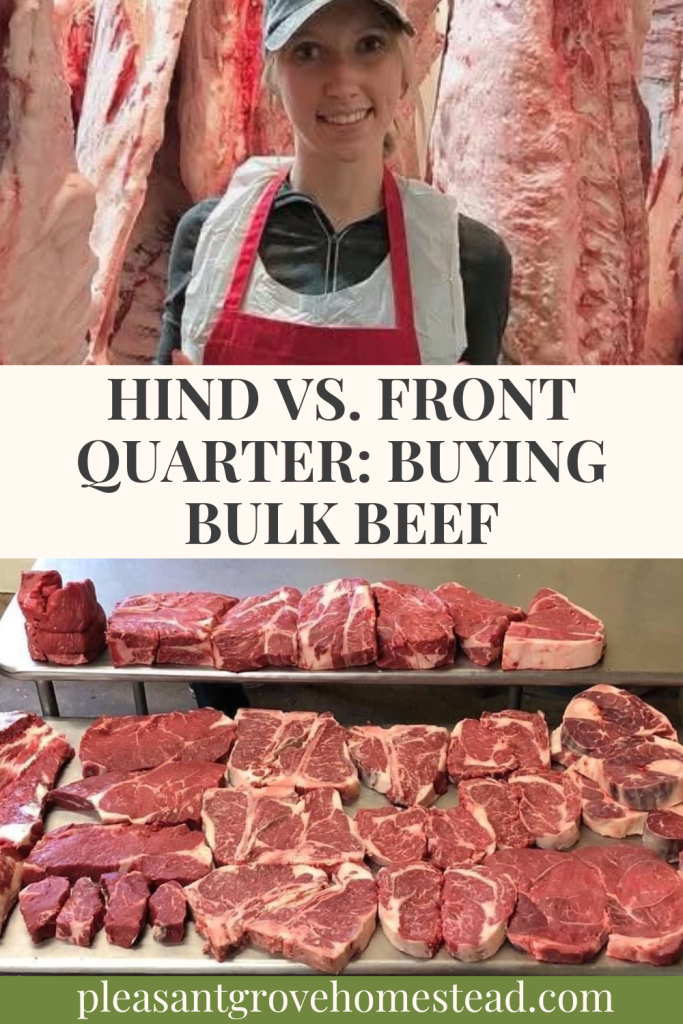
For reference, here’s a photo of a HALF BEEF before being packaged. This is one of Julie at Wanders Farms very own beef. She is both the farmer and locker owner for that true farmer connection!

What Is Hanging Weight and Why It Matters
Hanging weight refers to the weight of the animal after slaughter, but before it is butchered into individual steaks, roasts, and ground meat.
- The final price you pay is based on the hanging weight, not the weight of the packaged meat you take home.
- A portion is lost in fat trimming, bone, and moisture loss during aging.
- Expect to take home roughly 60–65% of the hanging weight in finished cuts.
Tip: Ask your farmer what the average hanging weight has been for their animals going to the locker! This will help you plan on the price.
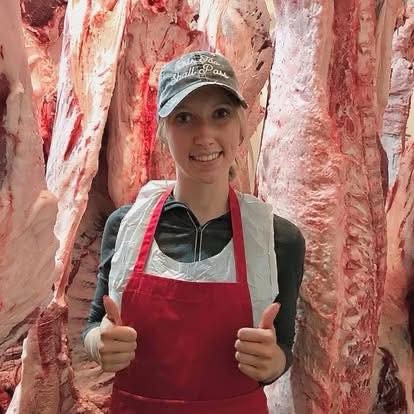
Here’s Julie pictured with her beef at Wanders Farms! Julie bought the locker as a way to make sure her beef went to the hands of as many locals as she knew!
Subprimal Cuts, Steaks & Roasts: What You’ll Get
Here’s a typical quarter beef package breakdown:
| Cut Type | Examples |
|---|---|
| Steaks | T-bone steak, strip steak, sirloin steaks, skirt steak, flank steaks, filet mignon, New York strip |
| Roasts | Chuck roasts, rump roast, top round, sirloin tip |
| Ground Meat | Ground beef, kabob meat, stew meat |
| Other | Soup bones, dog bones, short ribs, short plate, prime rib, 13th ribs |
These cuts are pulled from the primal beef cuts and further broken down into subprimal cuts and individual steaks.
Grass-Fed Beef: What to Expect
If you’re sourcing grass fed beef there are some things to know before you try it for the first time. You can expect:
- Leaner meat with lower fat content
- Lower hanging weight compared to grain-fed cattle
- Richer, slightly more “earthy” flavor
- Better nutrition (higher Omega-3s and CLA)
Grass-fed cuts — especially from the hindquarter — benefit from low temperature cooking to preserve tenderness.
Tip: Always ask the producer if they sell any individual cuts so you can see if you like their practices. People are sometimes surprised at the differences in flavor with grass-fed beef.
From Pleasant Grove Homestead: Why We Recommend Wanders Farms
Here at Pleasant Grove Homestead, we don’t sell beef ourselves (yet!), but we believe in supporting local food systems and helping families make informed choices.
That’s why we often recommend Wanders Farms in Otley, Iowa — a trusted, experienced local locker who processes beef in a timely fashion and with care. The owner. Julie Wanders, actually RAISES and PROCESSES the very beef she raised!
They have excellent quarters, halves, or whole beef, and ensure each customer receives a balanced share of all the main cuts — whether you’re ordering for the first time or stocking your freezer for the year.
Why Buying Beef in Bulk Is a Good Choice
- Great for any size family (choose a quarter if there are only two of you.. or some lockers offer and 1/8)
- Cost-effective compared to grocery store prices
- Full control over cut choices, fat content, and packaging
- You support local farmers and avoid large slaughter houses
- Ideal if you’re seeking a steady, local food source
Buying a quarter beef or half beef is the best way to build a reliable food supply at the local level.
Summary: Front Quarter vs Hind Quarter
| Category | Front Quarter | Hind Quarter |
|---|---|---|
| Includes | Chuck, rib, short ribs, soup bones, short plate | Short loin, sirloin, tenderloin, flank, round |
| Cooking Style | Slow cooker, moist heat, low temperature | High temperature, grill, pan sear |
| Cuts | Ground meat, chuck roasts, prime rib | T-bone, filet mignon, top sirloin |
| Value | More pounds for your dollar | More tender cuts per pound |
Final Thoughts
Whether you’re buying beef for the first time or just want to better understand what a quarter beef includes, knowing the difference between the front quarter and hind quarter, how much cubic feet of freezer space you’ll need, and what to expect from your local locker makes all the difference.
And while Pleasant Grove Homestead doesn’t sell beef, we’re proud to help our readers connect with local resources like Wanders Farms in Otley, Iowa — because supporting small-scale food producers is one of the best ways to feed your family and your community.
What’s the Difference Between Ground Pork and Beef?
This post may contain affiliate links. As an Amazon Associate, we earn from qualifying purchases. When it comes to ground meat, most grocery stores showcase ground beef in every fat ratio, from 70/30 to 95/5. It’s a favorite for burgers, chili, meat sauces, and casseroles. Ground pork, meanwhile, often occupies a smaller shelf, quietly waiting…

Why Seeds Won’t Germinate: Reasons Seeds Aren’t Sprouting
Struggling with seeds not germinating? Learn the most common causes of low germination rates and practical solutions from full-time produce growers using real-life experience.

How to Grow Kale From Seed: A Planting and Harvest Guide
This post may contain affiliate links. As an Amazon Associate, we earn from qualifying purchases. Kale plants are one of the most reliable crops we grow on our Iowa produce farm. Whether we’re transplanting kale seedlings in early spring, setting out a fall crop in late summer, or harvesting sweet leaves after a light frost,…

Storing Winter Squash Long Term: A how to guide for storage
This post may contain affiliate links. As an Amazon Associate, we earn from qualifying purchases. Winter squashes are one of the most reliable, low-maintenance, long-lasting foods you can keep on hand for the colder months. At Pleasant Grove Homestead, we love showing people how incredibly simple it is to store butternut squash, acorn types, spaghetti…

Roasting Winter Squash: A perfect recipe for all squash
This post may contain affiliate links. As an Amazon Associate, we earn from qualifying purchases. Winter squash is one of our favorite fall foods here at Pleasant Grove Homestead. From kabocha squash, acorn squash, spaghetti squash, and classic butternut squash, these vegetables are versatile, nutritious, and store beautifully all winter long. Unlike many other vegetables,…

A guide of Kale varieties: Tuscan vs. Curly Kale
This post may contain affiliate links. As an Amazon Associate, we earn from qualifying purchases. Here in Iowa, growing kale is a rewarding challenge. From the rolling fields of our homestead to farmers markets in Oskaloosa, Des Moines, and beyond, different types of kale thrive in our climate, especially as temperatures drop in late October…

