Why Seeds Won’t Germinate: Reasons Seeds Aren’t Sprouting
This post may contain affiliate links. As an Amazon Associate, we earn from qualifying purchases.
Few things are more frustrating than sowing seeds with care, checking them daily, and seeing nothing happen. No green sprouts, no new seedlings, just trays of soil and questions. As full-time produce growers, we’ve dealt with seed germination problems in every season, especially early spring, when excitement is high but conditions are far from ideal.
The good news? Most germination problems come from a short list of fixable issues. Understanding the seed germination process, from soil temperature to moisture levels, can dramatically improve success. Whether you’re starting indoor seeds, planting a container garden, or sowing directly in the field.
Start with the seed packet
Every seed packet contains critical information, yet this is one of the most commonly overlooked steps. Different varieties and a variety of seeds have very different needs, and treating them all the same is rarely a good idea.
Pay close attention to:
- Ideal soil temperature
- Whether seeds need light or a dark place
- Planting depth and spacing
- Expected germination time
For example, tiny seeds like lettuce often need to stay on the soil surface and require light, while larger seeds such as beans or squash must be planted deeper and need warmer soil. Ignoring these details is one of the most common causes of low germination rates.
Seed Quality: Old seeds, new seeds and everything in between
Before troubleshooting your setup, consider seed quality. Even under ideal conditions, old seeds or poorly stored seeds can fail.
Common quality issues:
- Seeds past their expiration date
- Improper proper storage
- Seeds exposed to heat or humidity
- Own seeds saved last year but not fully dried
We store seeds in a cool, dry place inside an airtight container, like rubber maid totes. When seeds miss the tote, we see noticeably low germination rates—especially with sensitive crops like pepper seeds.
If you suspect bad seeds, test them inside a wet paper towel before planting a full tray.
The paper towel method: testing seeds
The paper towel method is one of the best ways to test seed viability using limited space and limited resources.
How to:
- Place seeds on a damp paper towel
- Fold and put inside a plastic bag
- Leave slightly open for airflow
- Keep at stable room temperature
Within several days to a week, viable seeds will begin seed germinating. If nothing happens after enough time, it’s likely time for new seeds.
This method is especially helpful for slow germinators like peppers or when working with a specific seed variety.
Soil temperature: the #1 reason seeds don’t germinate
In our experience, soil temperature is the biggest factor gardeners underestimate. Warm air does not equal warm soil.
Why soil temperature matters
- Cold temperatures slow internal seed processes
- Cooler temperatures increase the risk of rot
- Extreme temperatures can kill the seed embryo
Using a soil thermometer removes the guesswork and helps ensure seeds are planted under the right conditions.
Warm-season crops need consistently warm soil:
- Peppers: 75–85°F
- Tomatoes: 70–80°F
- Beans (bean seed): minimum 60°F
Heat mats, heating pads, and giving seeds a head start
When starting indoor seeds, a heat mat, heating mat, or heating pad is often the difference between success and failure.
These tools gently warm the soil—not the air—creating ideal conditions for germination. Once seeds sprout, remove the heat to avoid weak growth.
For outdoor growers, row covers and a cold frame help buffer temperature swings and protect seeds from heavy rains and late frosts.
Moisture levels: finding the balance
Seeds need enough water, but too much water is one of the fastest ways to fail.
Signs of moisture problems
- Seeds rot before sprouting → much moisture
- Mold on the soil surface
- Seedlings collapse shortly after emergence
The goal is moist soil, not saturated soil. We aim for soil that feels like a wrung-out sponge.
Fungal disease and damping-off in young seedlings
If your seeds sprout and then suddenly die, fungal disease is likely the cause. These fungal infections thrive in damp conditions, poor airflow, and overcrowded trays.
How to prevent it
- Use clean seed trays or solo cups
- Start with fresh seed-starting mix
- Avoid keeping seedlings under a humidity dome too long
- Provide good air circulation
Once damping-off appears, there’s no fix! It needs to be prevented!
Choosing the right growing medium
Using regular garden soil, sandy soil, or compost-heavy mixes often leads to compaction and poor oxygen flow.
For best results, use:
- Lightweight seed-starting mix
- Soilless growing medium
- Containers with good drainage
Seeds don’t need nutrients at first—they need air, warmth, and consistent moisture. We prefer Vermont Compost! Locals, Contact us to see if we have extra available for sale.
Light: critical after germination
Most seeds don’t need light to sprout, but new seedlings need enough light immediately after emergence.
Common lighting mistakes
- Light too far away
- Not enough daily hours
- Relying solely on windows
Before we had our greenhouse we used grow light systems with fluorescent lights placed just a few inches above seedlings to grow strong, stocky plants.
Seed size matters more than you think
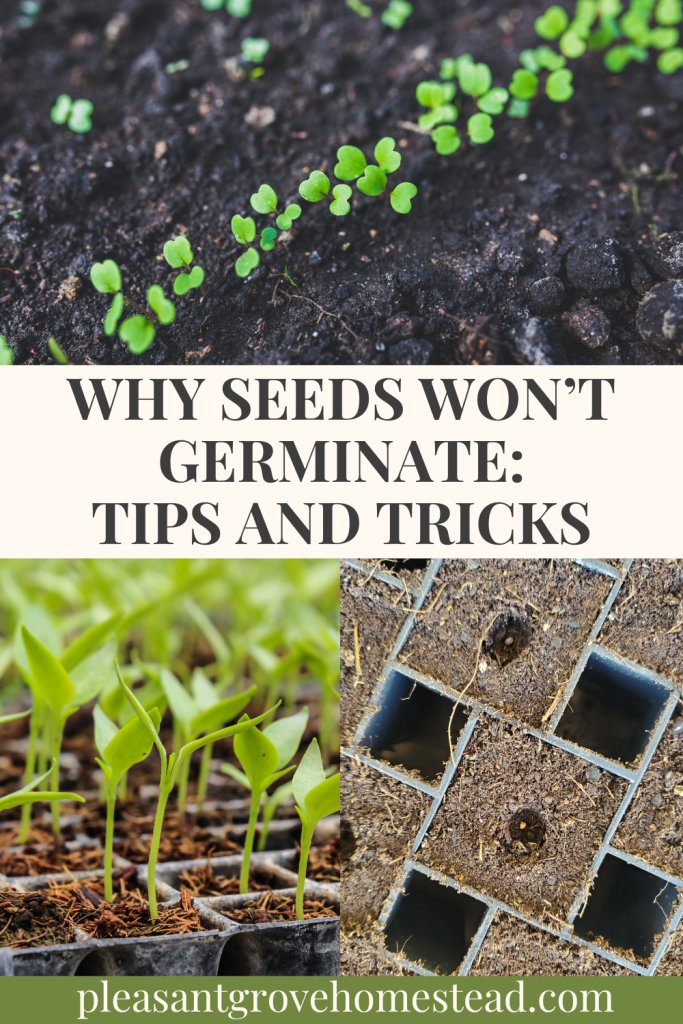
Large seeds and tiny seeds behave very differently.
- Large seeds need deeper planting and consistent moisture
- Tiny seeds stay on the soil surface and dry out quickly
Understanding seed size helps avoid unnecessary germination problems.
Timing, patience, and giving seeds enough time
Some seeds simply take a long time. Giving up too early is another common issue, especially with peppers.
If soil temperature is correct and moisture is steady, patience often pays off. Carrots are another one that’s frustrating! It can take up to 20 days for a carrot to germinate and since they are direct seeded, often the weeds are taking over!
Environmental factors that impact germination
Beyond soil and water, other environmental factors play a role. Avoid:
- Drafts
- Fluctuating indoor temperatures
- Low humidity
- Overcrowding
Creating stable conditions gives seeds a good chance to succeed.
Why we always plant extra
Even under perfect conditions, germination isn’t guaranteed. We intentionally sow extra seeds so we aren’t set back later in the growing season.
Seeds are inexpensive but missing a critical planting timing is worse!
Final thoughts: the best way to improve seed germination
The best way to improve germination is observation and adjustment. Nearly all failures trace back to:
- Incorrect temperature
- Poor moisture control
- Low seed quality
- Inadequate light after sprouting
Each season, even after years of growing, we learn something new. When you see those first green sprouts, it marks the beginning of a new day in the garden and a successful season ahead.
What’s the Difference Between Ground Pork and Beef?
This post may contain affiliate links. As an Amazon Associate, we earn from qualifying purchases. When it comes to ground meat, most grocery stores showcase ground beef in every fat ratio, from 70/30 to 95/5. It’s a favorite for burgers, chili, meat sauces, and casseroles. Ground pork, meanwhile, often occupies a smaller shelf, quietly waiting…

How to Grow Kale From Seed: A Planting and Harvest Guide
This post may contain affiliate links. As an Amazon Associate, we earn from qualifying purchases. Kale plants are one of the most reliable crops we grow on our Iowa produce farm. Whether we’re transplanting kale seedlings in early spring, setting out a fall crop in late summer, or harvesting sweet leaves after a light frost,…

Storing Winter Squash Long Term: A how to guide for storage
This post may contain affiliate links. As an Amazon Associate, we earn from qualifying purchases. Winter squashes are one of the most reliable, low-maintenance, long-lasting foods you can keep on hand for the colder months. At Pleasant Grove Homestead, we love showing people how incredibly simple it is to store butternut squash, acorn types, spaghetti…

Roasting Winter Squash: A perfect recipe for all squash
This post may contain affiliate links. As an Amazon Associate, we earn from qualifying purchases. Winter squash is one of our favorite fall foods here at Pleasant Grove Homestead. From kabocha squash, acorn squash, spaghetti squash, and classic butternut squash, these vegetables are versatile, nutritious, and store beautifully all winter long. Unlike many other vegetables,…

A guide of Kale varieties: Tuscan vs. Curly Kale
This post may contain affiliate links. As an Amazon Associate, we earn from qualifying purchases. Here in Iowa, growing kale is a rewarding challenge. From the rolling fields of our homestead to farmers markets in Oskaloosa, Des Moines, and beyond, different types of kale thrive in our climate, especially as temperatures drop in late October…

Beef and Noodles: Easy meal with leftover roast
This post may contain affiliate links. As an Amazon Associate, we earn from qualifying purchases. Homemade beef and noodles are a classic comfort food that’s perfect for busy families. This easy recipe uses simple ingredients and transforms leftover roast beef or chuck roast into a delicious meal that’s ready to join your dinner rotation. Whether you’re serving it to picky eaters or planning a whole meal with sides like green beans, this classic…